

In a continuing series throughout the duration of The Walking Encyclopaedia, we'll be highlighting, daily, the works of several practitioners who employ the walk within their practice. Each of the highlighted artists and artworks were submitted for exhibition to The Walking Encyclopaedia. In each case alongside their artist statement, a link to the artist's website is provided for further exploration.
The Walking Encyclopaedia is a co-production between AirSpace Gallery and the Walking Artists Network.
#79 - Polly Welsby

Welsby uses her work to do
active things that will benefit herself, other people and the environment. This
is an attempt to improve herself in terms of health, morals and personality. The work is a space for her to try out moral positions that are new to her and assess
the reality of fulfilling these.
Walking is a cost-free,
healthy way to explore at one's own pace. Walking is exercise that allows
creativity at the same time. A walk has no aim but is an opportunity to respond
to needs that she comes across.
Canals are another man
made construction within the city but they can bring one closer to nature. Welsby works outdoors and in public to expand the potential sites and audiences for the work.
In the documentation of
this walk Welsby points out walking space as a resource to spend time in and to
notice things. Hopefully this will inspire future walks and useful acts.
#80 - Rachel Gomme
'Flyer for Ravel: Knitted Map'.

This is a 2D work made as a flyer for my performance Ravel, a 6-hour
durational performance made for Camberwell Arts Festival in 2006. I laid a line of yarn through the streets of Camberwell, connecting
places historically linked with water (the former bath-house, the
line of the Surrey Canal, the site of the ancient healing well for
which the area is named); I then retraced my steps over the 6 hours
of the performance, knitting up the yarn and incorporating found and
donated objects along the way.


 made in Chester in 2008, this was a reworking of Ravel, made for the Roam the Rows festival in Chester. This time I laid the yarn along one of Chester's historic 'rows' (Tudor shopping arcades) and returned knitting up the yarn and incorporating objects donated by the shops I was passing, creating a 'map' of the Row.
http://www.axisweb.org/p/rosiekearton


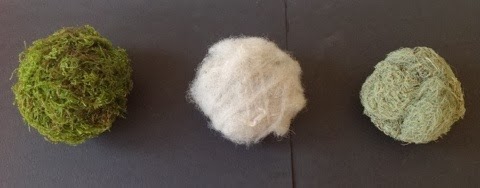 3 more balls made – 2 lichen and 1 of sheep’s wool collected along the way from hedges and fences and rolled in my hands while walking – a very meditative experience and totally phenomenological.
I now have 6 balls and am not sure how to display them for my assessment next week. My tutor commented negatively on my display of them at my crit – I had 3 arranged on a narrow shelf – I’m wondering now about using a plinth or does that carry the same message as the shelf? I can possibly make one more by next week giving me 7 for display – ‘a week of quiet walking’
http://sabatinb.wix.com/art#!

Travel, mobility and exploration are the central themes in my practice. The sculptures, books and audio-visual installations are the results of journeys and activities, where I meet other travellers, try out new languages, create logbooks, map the territory, and sometimes construct my own means of travel. In order to do this, I don't necessarily travel to far away places. Instead, I look out for discoveries that lie on my path. In the shoe projects, with self-made shoes, I focus on the act of walking. The wearer, in a performative act, is disabled from just mechanically moving the feet over the ground. The modified shoes function as tools that help to experience the body as a vehicle with a set of more or less controllable abilities.

This series of drawings documents the city of Birmingham. The architectural idealism of ink on tracing paper is contrasted with references to a fantasy comic book world. The broader concept of the individual in the city is alluded to through indications of Baudelaire's essays on Modernism to Batman's Gotham. Solo show of drawings on paper were on show at the print room at The Barber Institute of Fine Arts Aug 31st - Dec 2nd 2012.


 This piece uses the comic format as an alternative mode of distribution for art. The graphic narrative of CITY introduces the viewer to a set of characters exploring the city of Birmingham. They draw upon 19th century Modernist philosophies alongside wider constructions of identity within urban culture. The term ‘flaneur’ was coined by Baudelaire, and represents one who wanders the city streets, revelling in the joys of urban life. It draws upon wider references to the construction of comic books, architectural drawing, and the distribution of art.


 The collected objects and photographs from my daily walks in local parkland likewise provide me as an artist, with tangible fragments of the world, on which to reflect. Working with drawing, photography and printmaking, the things I make, shaped as they are by a convergence of technology and serendipity, knowingly play with the lyrical ambiguities of pictorial representation.
This 10 minute film, made in 2009, documents an urban walk through the Aire Valley by Bradford’s ‘Walking Man’, a well-known local figure who has maintained a systematic or compulsive walking practice for a good 50 years. Invariably dressed in a cassock and sandals, he resembles a Mendicant Friar and has naturally attracted the nicknames Jesus Man and Wandering Monk. Despite continuing speculation (see bradfordjesusman.co.uk) it is not clear whether he walks performatively, as religious observance, or as a vulnerable adult, but in any case attracts comparison with some of Wordsworth’s socially marginal figures, the Leech Gatherer and Old Cumberland Beggar for instance.
In his early poetry Wordsworth identifies strongly with itinerant characters, inventing for British readers the concept of walking to explore the soul as well as the world:
. . . The lonely roads
Were schools to me in which I daily read
With most delight the passions of mankind,
There saw into the depth of human souls . . . .
The Prelude Book XIII
Our roads are no longer lonely. Indeed the edge of a main road is one of the most inhospitable places in which to find oneself, which makes the subject of this film all the more remarkable
----------------------------------------------------------------------------------------------------------------
'Flyer for Ravel: Knitted Map'.
This is a 2D work made as a flyer for my performance Ravel, a 6-hour
durational performance made for Camberwell Arts Festival in 2006. I laid a line of yarn through the streets of Camberwell, connecting
places historically linked with water (the former bath-house, the
line of the Surrey Canal, the site of the ancient healing well for
which the area is named); I then retraced my steps over the 6 hours
of the performance, knitting up the yarn and incorporating found and
donated objects along the way.
Ravel: Knitting a Row'
made in Chester in 2008, this was a reworking of Ravel, made for the Roam the Rows festival in Chester. This time I laid the yarn along one of Chester's historic 'rows' (Tudor shopping arcades) and returned knitting up the yarn and incorporating objects donated by the shops I was passing, creating a 'map' of the Row.
-------------------------------------------------------------------------------------------------
#81 - Rosie Kearton
http://rosiekearton.wordpress.comhttp://www.axisweb.org/p/rosiekearton
I now have 6 balls and am not sure how to display them for my assessment next week. My tutor commented negatively on my display of them at my crit – I had 3 arranged on a narrow shelf – I’m wondering now about using a plinth or does that carry the same message as the shelf? I can possibly make one more by next week giving me 7 for display – ‘a week of quiet walking’
In 2005 at the age of 60 I made the decision to study, part time for a B A (Hons) Fine Art degree. It was something I'd always wanted to do and somehow avoided for numerous reasons. I didn't think I was 'good enough' if truth be known. I married early and had 5 daughters, then spent 30 years in various arts and voluntary sector jobs. My daughters now all have degrees and this year, 2012, it was my turn. As a mature student the wealth of experience and memories that I bring to my practice has been a real strength. I have even enjoyed critical studies and the challenge of writing essays. In 2012 I achieved. BA (1st class hons) in Fine Art. I am interested in exploring the mystery of our existence revealed through our connection with the world and the marks and traces we leave behind and embodying the relations between history, daily life, memory and the ever changing present. My work is concerned with a broad theme of time, layers of meaning and memories, and concern with what has been lost or discarded. I focus on the transitory, fragile and fragmentary nature of existence, human identity and mortality. I have a passion for walking in the mountains or by the sea, and travelling to different places, where I like to spend time wandering and sometimes getting lost. I often collect something along the way, a stone, a travel ticket, a fragment that sparks a memory of that journey, place, and time. Being experimental, curious, playful, taking risks and accepting failure is central to the way I develop my ideas. I also enjoy initiating collaborative projects and inviting other artists to take part, not quite knowing how the project is going to develop. I am a collector of 'seemingly' mundane objects that hold a personal fascination. My artistic practice often feels like a forensic investigation of 'historical' fragments; a search of the past in order to create associations that illuminate the present. I examine these fragments and objects through drawing, spacial interventions, projection, alternative photographic techniques, for example pinhole cameras, photograms and Super 8 film. I also take lots of digital photographs and collect archive images for reference. The materials that I use are chosen for their strength to convey a message, and as a catalyst for igniting debate. I incorporate found and discarded objects whenever possible to support my concern with environmental issues. My work may be two or three dimensional or take the form of an artist's book or installation, often as multiples, collections or repeated units.
--------------------------------------------------------------------------------------------------------------------------------
#82 - Sabatin Bascoban -
In the video “The Making of La Botte Gonflable” the protagonist has a hard time setting one food in front of the other; the simplest tasks sometimes become the hardest to do. Instead of dragging herself over the pavement, she invents boots, which make the walking experience somewhat enjoyable again.
----------------------------------------------------------------------------------------------------------
#83 - Sarah Silverwood
LIVING CITY, 2012
CITY, 2011
This piece uses the comic format as an alternative mode of distribution for art. The graphic narrative of CITY introduces the viewer to a set of characters exploring the city of Birmingham. They draw upon 19th century Modernist philosophies alongside wider constructions of identity within urban culture. The term ‘flaneur’ was coined by Baudelaire, and represents one who wanders the city streets, revelling in the joys of urban life. It draws upon wider references to the construction of comic books, architectural drawing, and the distribution of art.
Limited print run of 1000 copies, each signed
-----------------------------------------------------------------------------------------------------------------------------------------
#84 - Serena Smith

Footfall
Found object and printed paper, 2013.
A flourishing of interest in the genre of landscape in the late 18th Century led to a surge of tourism to the English countryside – walking outdoors and appreciating the landscape became fashionable. Picturesque images of a pastoral idyll encouraged the romantic imagination of these travellers. But to visualise these scenes amongst the untamed expanses of the natural environment the observers needed help, and turned to technology in the form of the Claude Glass. Viewed through the circular screen of this tinted mirror, the sensory flux of the physical environment could be filtered and contained. And within the surface of this small reflective object, the threshold between real and imagined space could be more readily navigated.
 The collected objects and photographs from my daily walks in local parkland likewise provide me as an artist, with tangible fragments of the world, on which to reflect. Working with drawing, photography and printmaking, the things I make, shaped as they are by a convergence of technology and serendipity, knowingly play with the lyrical ambiguities of pictorial representation.
Serena Smith is an artist and printmaker based in Leicester. Her work includes a range of educational, technical and collaborative projects, alongside her studio practice.
-----------------------------------------------------------------------------------------------------------
Cairo Walks
12 mins 31 secs. December 2010
Simon Farid
I am writing to submit a single-channel video work called 'Cairo Walks' and was made during an Arts Council funded practice-based research trip to Cairo that was undertaken for a separate project I was making during my residency at Crescent Arts in Scarborough a few years ago.
In the piece, the camera is situated to show my 'eye view'. I take different walks around Cairo, apparently aimlessly. Whilst walking, every time I hear a car horn, I whistle, mimicking the sound.
This work was made to explore the difficulties experienced when one finds oneself in a foreign or alien place, far form home, and how this can affect ones output. It refers to the sense of being ‘uncentered’ in a new and different place, and the attempts one makes to map and learn places, as work, but more importantly as delimiting a space within which work can then take place. So I walk around the city, pace and place dictated by what is around me.
In terms of my whistling, on the face of it, it may be describing a feeling of culture shock; the abundance of car horns obviously alien to what one experiences in Britain, where a car horn is only heard to denote a crisis. But I hope the film probes deeper than this, maybe approaching an interrogation of problems involved in the reportage and representation of different cultures. This reportage, the sounds I offer in the film, although almost immediate, are obviously flawed. The use of my body in re-enacting the horns is a poor tool to use; the sound and nature of the horns are invariably changed. So here I’m using my body to loosely explore the problems with translation in trans-boarder reporting and the role ones body has in this reportage and mimicry.
In Britain a car horn represents a minor crisis. The identifying of the car horns sounds with crisis may also represent something pertinent here. The film was made in Cairo just before the 2011 revolution, at a time in which the country was still under the emergency law, instigated 30 years pervious. This emergency law represented, for the governing class and the population, a permanent sense of crisis (incidentally we are seeing more and more governments experimenting with perpetual crisis as a way of keeping the peace). My position here could be seen as acting as a reporter of this constant crisis, an attempt to normalize myself with the state of affairs, or bearing witness to the effects being in such a crisis state has on all who experience it for a long period of time.
I have been very interested by how the meaning of this work has changed with the series of political events that have taken place in Egypt since my trip. The work now has a heightened sense of a cultural/historical document about it, rather than a merely private exercise carried out by an individual in a foreign place. Given the very recent second revolution (/coup depending on how conservative you are) I would love to revisit this work again and look to re-evaluate and interrogate the meaning once more through public display within the context of other walking practices.
----------------------------------------------------------------------------------------------------------
In his early poetry Wordsworth identifies strongly with itinerant characters, inventing for British readers the concept of walking to explore the soul as well as the world:
. . . The lonely roads
Were schools to me in which I daily read
With most delight the passions of mankind,
There saw into the depth of human souls . . . .
The Prelude Book XIII
Our roads are no longer lonely. Indeed the edge of a main road is one of the most inhospitable places in which to find oneself, which makes the subject of this film all the more remarkable
Simon Warner is a filmmaker, photographer and researcher with interests in landscape history and early visual culture. His performative walks and tours have explored the Romantic pleasure grounds of Harewood House and the coaching route from Leeds to the north. Film projects include A Guide to Yorkshire Rivers (2006) and Dark Greta’s Voice for ‘Art and Yorkshire’ at Mercer Gallery, Harrogate 2014. Image, Instinct & Imagination, an exhibition with the geographer Jay Appleton, opens at the Royal Geographical Society, London on 30 March 2014.
-------------------------------------------------------------------------------------------------------------------------------------------


